AP Bio LabAP Bio Lab
HomeLearnFlashcardsPracticeMock ExamDashboardAbout
AP Bio LabLearnGene Expression & Regulation
Unit 0612-16% of exam9 lessons

Gene Expression & Regulation

DNA → RNA → protein, mutations, regulation, and biotechnology.

Progress
0/9 · 0%

Lessons

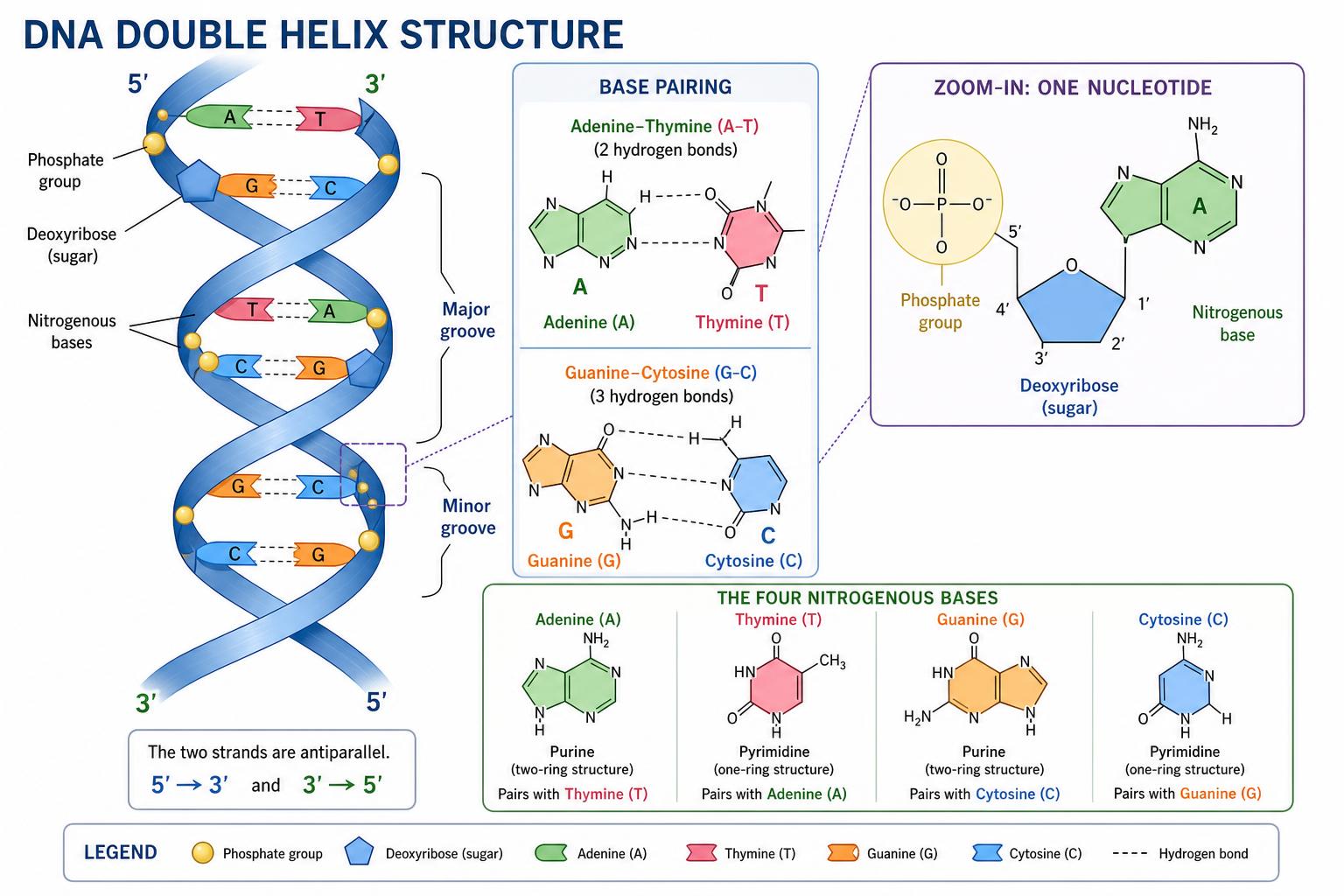
  1. 6.1DNA and RNA StructureDNA and RNA are polymers of nucleotides whose structure encodes and transmits genetic information.
  2. 6.2ReplicationSemiconservative replication uses each parental strand as a template to build two identical daughter molecules.
  3. 6.3Transcription and RNA ProcessingRNA polymerase transcribes DNA into pre-mRNA, which is then processed into mature mRNA in eukaryotes.
  4. 6.4TranslationRibosomes read mRNA codons and use tRNA to assemble amino acids into a polypeptide chain.
  5. 6.5Regulation of Gene ExpressionOperons regulate prokaryotic gene clusters, while eukaryotes use multiple layers of regulation including transcription factors and epigenetics.
  6. 6.6Gene Expression and Cell SpecializationDifferential gene expression from an identical genome allows cells to differentiate into specialized types.
  7. 6.7MutationsChanges to the nucleotide sequence of DNA can range from silent to catastrophic, depending on type and location.
  8. 6.8BiotechnologyModern molecular tools like PCR, gel electrophoresis, CRISPR, and recombinant DNA let scientists analyze and manipulate genetic material.
  9. 6.xViruses & Genetic VariationHow viruses replicate, mutate, and shuffle genetic information between hosts.

Figure · reference

DNA double helix structure with base pairing and nucleotide detail
Practice MCQs Practice FRQs Flashcards

AP Bio Lab is a free, independent study hub for AP Biology. All questions are original and written to match the style of the exam, mapped to the course framework, and corrected when students report an error. Not affiliated with or endorsed by the College Board. AP and Advanced Placement are registered trademarks of the College Board.

Est. 2026 · Built for the exam · About