
Gene Expression and Cell Specialization
Differential gene expression from an identical genome allows cells to differentiate into specialized types.
One genome, many cell types
Nearly every cell in a multicellular organism contains the same complete set of genes (with rare exceptions like mature red blood cells or B/T cells that undergo genome rearrangement). Yet organisms contain hundreds of visibly and functionally distinct cell types - muscle, nerve, skin, gland. This is possible only because different cells express different subsets of their shared genome.
Differentiation is the process by which a relatively unspecialized cell becomes a specialized cell type with a distinct structure and function, driven by turning specific genes on and specific genes off - often permanently, via mechanisms like chromatin remodeling and DNA methylation established early in development.
Determination precedes differentiation
Determination is the commitment of a cell to a specific fate, which occurs before any visible structural change (differentiation itself). Once determined, a cell's descendants will differentiate into a specific cell type even if moved to a different environment, because internal factors (like committed transcription factor expression) and prior epigenetic marks have already locked in that developmental program.
Cell signaling and induction drive differential expression
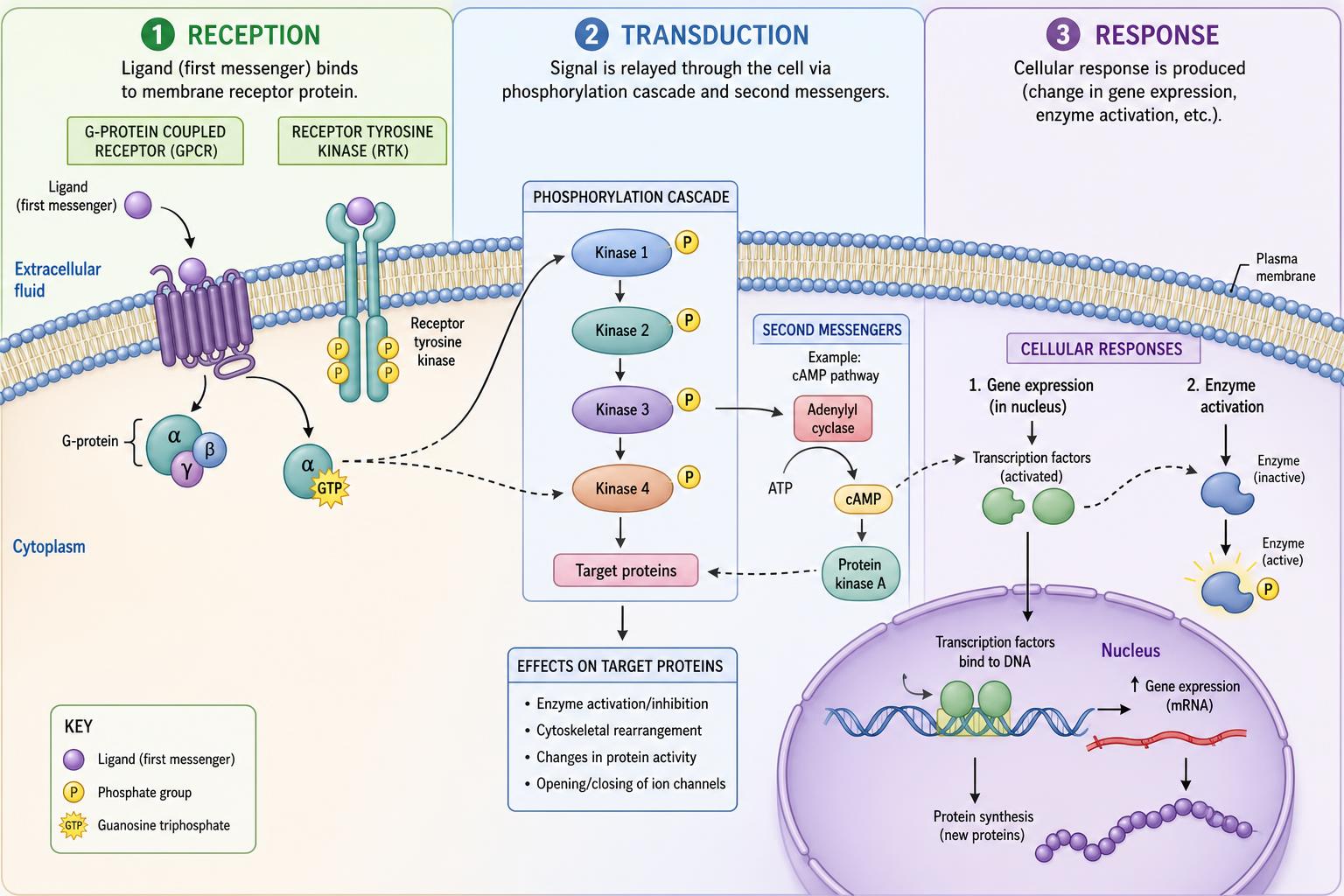
Differential gene expression is often triggered by signals: cytoplasmic determinants (unevenly distributed maternal molecules in the egg) can activate different genes in different regions of an early embryo, and induction - signaling molecules from one group of cells altering the gene expression and fate of neighboring cells - coordinates development of adjacent tissues.
These signals ultimately act by activating or repressing specific transcription factors, which then turn on cascades of downstream target genes appropriate to that cell's specialized role (e.g., MyoD triggers a whole suite of muscle-specific genes in muscle precursor cells).
Stem cells and potency
- Totipotent cells (e.g., the zygote and very early blastomeres) can give rise to every cell type, including extraembryonic tissues like the placenta.
- Pluripotent cells (e.g., embryonic stem cells) can give rise to nearly all cell types of the body but not extraembryonic tissues.
- Multipotent adult stem cells (e.g., hematopoietic stem cells) can differentiate into a limited range of related cell types.
- Induced pluripotent stem cells (iPSCs) can be created in the lab by reprogramming differentiated adult cells to re-express a small set of key transcription factors, restoring pluripotency.
Master regulatory (homeotic) genes
Homeotic genes, including the highly conserved Hox gene family, encode transcription factors that control the identity and spatial arrangement of body segments during embryonic development by regulating entire batteries of other genes. Mutations in Hox genes can cause dramatic developmental abnormalities, such as legs growing where antennae should be in Drosophila, illustrating how a single regulatory gene change can cascade into large-scale changes in the organism.
Key terms
4
- Differential gene expression
- Expression of different genes (or sets of genes) in different cell types despite an identical genome.
- Determination
- The commitment of a cell to a particular developmental fate, prior to visible differentiation.
- Totipotent
- Capable of differentiating into any cell type, including extraembryonic tissues.
- Homeotic (Hox) gene
- Master regulatory gene that controls the identity and pattern of body segments during development.
Sign-off
Finish this lesson
A lesson only counts once you've read all the way through and completed every activity on the page.
- Read the full lesson (scroll to the end)
- Complete all activities (0/1 done)