
Biodiversity
Biodiversity at genetic, species, and ecosystem levels underlies ecosystem stability, productivity, and resilience.
Levels of biodiversity
Biodiversity operates at three nested levels. Genetic diversity refers to the variation in alleles and genotypes within a species or population; it provides the raw material for adaptation and evolution and buffers populations against environmental change and disease. Species diversity refers to the variety and relative abundance of species within a community or region, commonly quantified by both species richness (number of species) and species evenness (how evenly individuals are distributed among those species). Ecosystem diversity refers to the variety of habitats, communities, and ecological processes across a landscape or biosphere.
A community with high species richness but dominated by a single species (low evenness) is generally considered less diverse in a functional sense than a community with the same richness and more even abundance, since diversity indices (such as the Shannon index) incorporate both components.
Biodiversity, stability, and productivity
Ecosystems with higher biodiversity tend to be more resilient to disturbance and more stable in productivity over time, partly because functional redundancy means multiple species can perform similar ecological roles - if one species declines, others may compensate, buffering the overall function of the ecosystem. Diverse ecosystems can also more fully exploit available resources (light, nutrients, space) because differing niches among species reduce wasted resource use.
This relationship is not unlimited, however - beyond a certain point, adding more species yields diminishing returns for ecosystem function, and stability also depends on the specific identity and roles of species present (e.g., presence of keystone species), not diversity alone.
Ecosystem services and human dependence
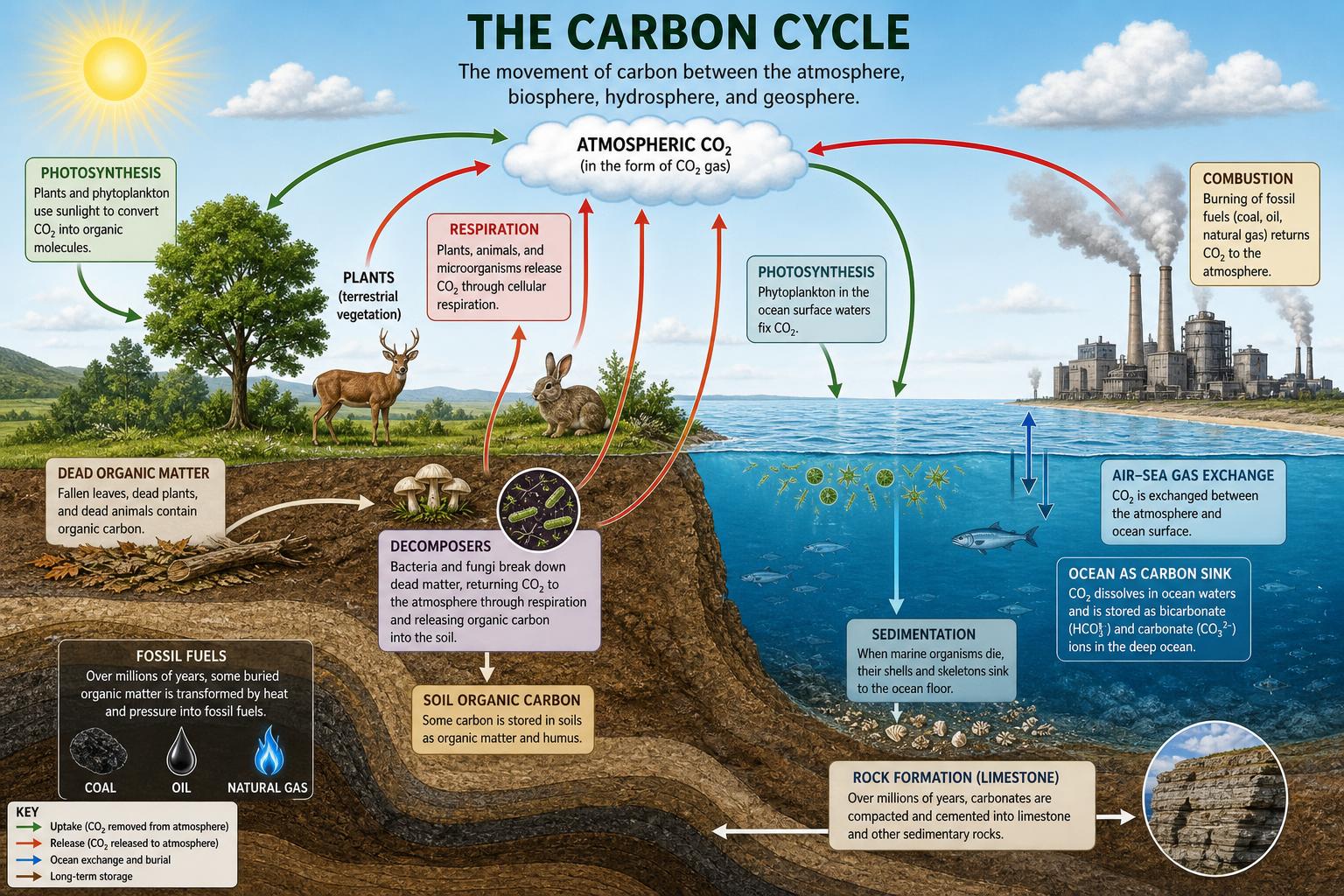
Biodiversity underlies critical ecosystem services that humans depend upon: pollination of food crops by insects and other animals, water filtration and purification by wetlands and forests, carbon sequestration and storage that moderates climate, soil formation and fertility maintenance, and natural pest and disease control. Loss of biodiversity erodes these services, often in ways that are not apparent until a threshold is crossed and the service fails.
Biodiversity also has direct value as a source of medicines, genetic resources for agriculture, and cultural, recreational, and aesthetic value, providing strong practical incentives for conservation beyond intrinsic ethical arguments.
Key terms
4
- Biodiversity
- The variety of life at genetic, species, and ecosystem levels within a given area.
- Species richness
- The number of different species present in a community.
- Species evenness
- The relative abundance of each species within a community.
- Ecosystem services
- Benefits humans obtain from ecosystems, such as pollination, water purification, and carbon storage.
Sign-off
Finish this lesson
A lesson only counts once you've read all the way through and completed every activity on the page.
- Read the full lesson (scroll to the end)
- Complete all activities (0/1 done)