
Disruptions to Ecosystems
Natural disturbances and human activities disrupt ecosystems and reduce biodiversity, though conservation strategies can mitigate these impacts.
Habitat loss, fragmentation, and invasive species
Habitat loss and fragmentation are the leading drivers of species extinction and biodiversity decline worldwide. Roads, agriculture, and urban development convert continuous habitat into small, isolated patches that may be too small to support viable populations, reduce genetic exchange between subpopulations, and increase edge effects (altered microclimate and increased vulnerability to predators and invasive species along habitat edges).
Invasive species - introduced deliberately or accidentally to a new region, often by human activity - frequently outcompete, prey upon, or spread disease to native species that have not coevolved defenses against them. Examples include cane toads devastating native predator populations in Australia, zebra mussels disrupting Great Lakes food webs, and kudzu smothering native vegetation in the southeastern United States.
Pollution and biomagnification
Chemical pollutants such as pesticides (e.g., DDT) and heavy metals (e.g., mercury) can undergo biomagnification, becoming increasingly concentrated as they move up the food chain, since predators accumulate the toxin burden of all the prey they consume over their lifetime. DDT biomagnification famously thinned raptor eggshells, causing population crashes in birds like the bald eagle and peregrine falcon before the pesticide was banned.
Plastic pollution, industrial runoff, and air pollution similarly degrade ecosystems, harming organisms directly (ingestion, entanglement, toxicity) and indirectly by altering habitat quality.
Eutrophication
Excess nitrogen and phosphorus runoff from agricultural fertilizer, sewage, and animal waste dramatically accelerates algal growth in lakes, rivers, and coastal waters. When these algal blooms die, decomposing bacteria consume dissolved oxygen at a rate that outpaces replenishment, creating hypoxic 'dead zones' - such as the seasonal dead zone in the Gulf of Mexico - where fish and shellfish cannot survive.
Climate change and conservation responses
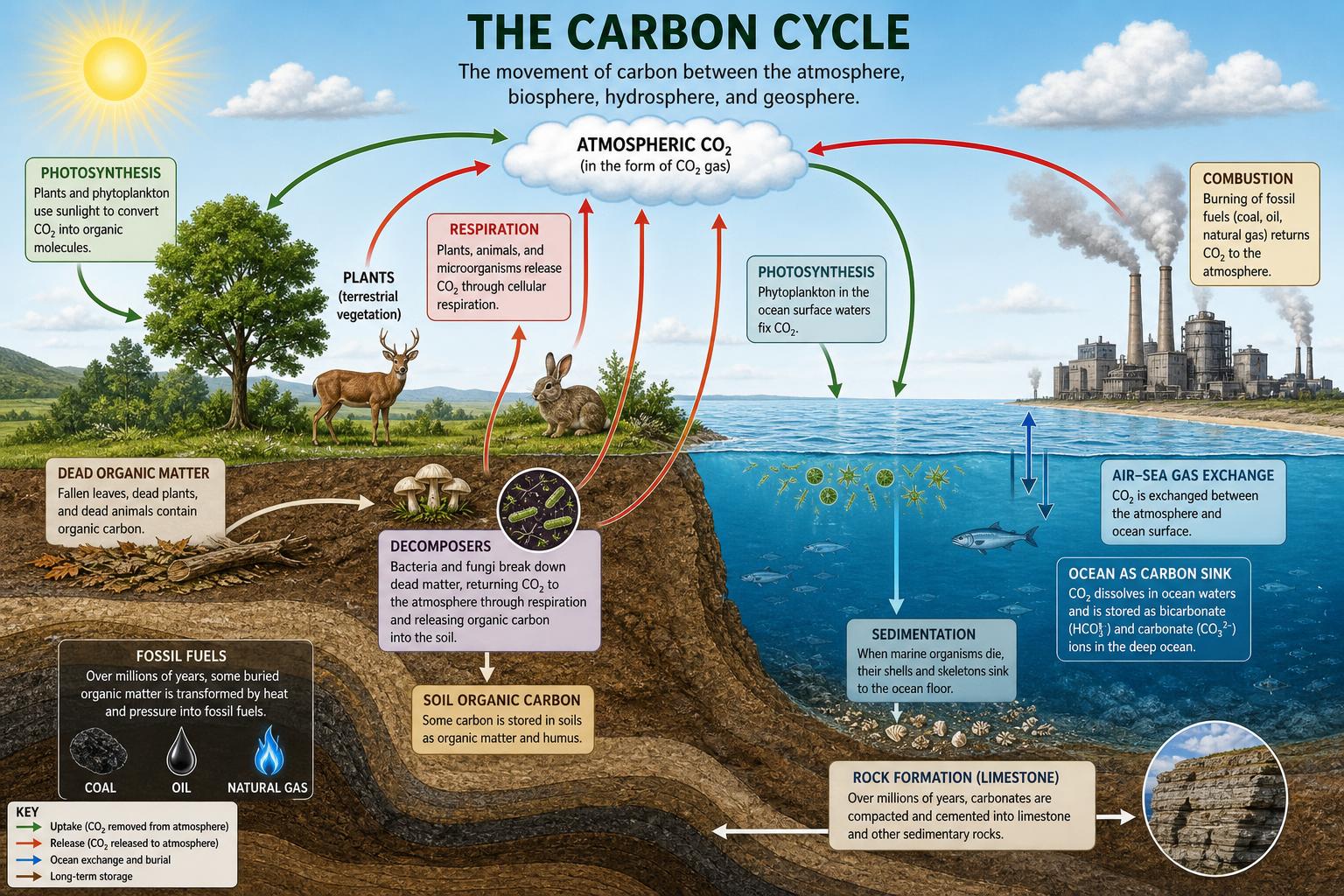
Rising atmospheric CO₂ from fossil fuel combustion drives global warming, shifting species geographic ranges poleward or upslope, altering phenology (timing of flowering, migration, and breeding), and causing ocean acidification as oceans absorb excess CO₂, which impairs calcification in corals, mollusks, and other marine organisms. These changes can create mismatches between interacting species (e.g., pollinators and the plants they pollinate) that disrupt established ecological relationships.
Conservation strategies to counter these disruptions include establishing protected areas (national parks, marine reserves), building wildlife corridors to reconnect fragmented habitats, captive breeding and reintroduction programs (e.g., California condor, black-footed ferret), habitat restoration, regulation and enforcement against illegal wildlife trade, and broader policy action to reduce greenhouse gas emissions and pollution.
Key terms
5
- Habitat fragmentation
- The breakup of a large, continuous habitat into smaller, isolated patches.
- Invasive species
- A non-native species introduced to an ecosystem that causes ecological or economic harm.
- Eutrophication
- Nutrient over-enrichment of water causing excessive algal growth and subsequent oxygen depletion.
- Ocean acidification
- The decrease in ocean pH caused by absorption of excess atmospheric CO₂.
- Biomagnification
- The increasing concentration of a toxin in organisms at successively higher trophic levels.
Sign-off
Finish this lesson
A lesson only counts once you've read all the way through and completed every activity on the page.
- Read the full lesson (scroll to the end)
- Complete all activities (0/1 done)