AP Bio LabAP Bio Lab
HomeLearnFlashcardsPracticeMock ExamDashboardAbout
AP Bio LabLearnChemistry of Life
Unit 018-11% of exam6 lessons

Chemistry of Life

Water, biological macromolecules, and the chemistry that makes life possible.

Progress
0/6 · 0%

Lessons

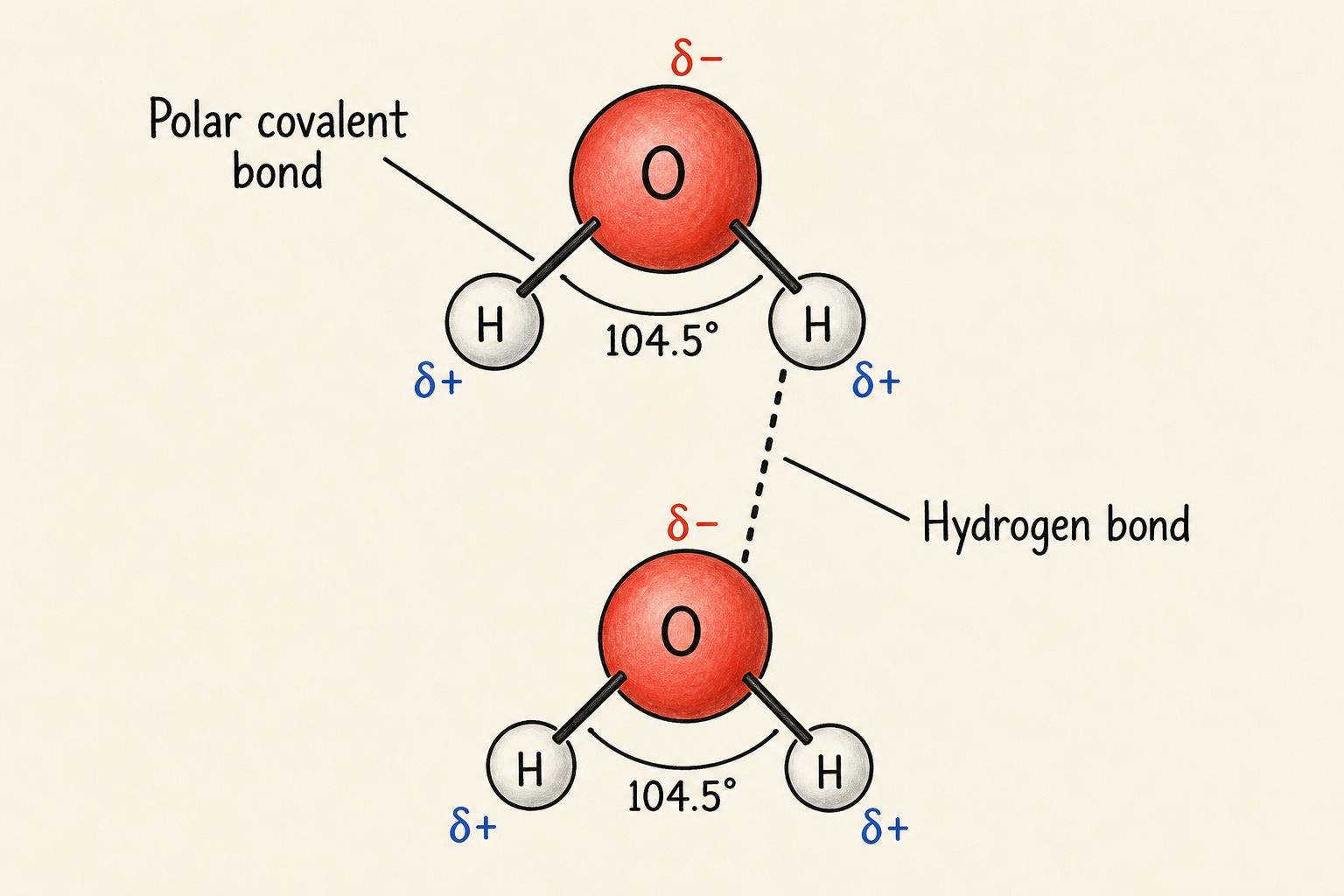
  1. 1.1Structure of Water & Hydrogen BondingWater's polarity and hydrogen bonding produce the emergent properties that make life possible.
  2. 1.2Elements of LifeA small set of elements, bonded in characteristic ways, accounts for nearly all of the chemistry of living systems.
  3. 1.3Introduction to Biological MacromoleculesCarbohydrates, proteins, and nucleic acids are polymers assembled from monomers via dehydration synthesis and disassembled by hydrolysis; lipids are large but not true polymers.
  4. 1.4Properties of Biological MacromoleculesThe properties of carbohydrates, lipids, and proteins emerge from their monomer composition, bonding patterns, and resulting polarity.
  5. 1.5Structure and Function of Biological MacromoleculesProtein structure is organized into four hierarchical levels, and structural changes at any level can alter or destroy function.
  6. 1.6Nucleic AcidsDNA and RNA are antiparallel polymers of nucleotides whose sequence and complementary base pairing store and transmit genetic information.

Figure · reference

Water molecule polarity and hydrogen bonding diagram
Practice MCQs Practice FRQs Flashcards

AP Bio Lab is a free, independent study hub for AP Biology. All questions are original and written to match the style of the exam, mapped to the course framework, and corrected when students report an error. Not affiliated with or endorsed by the College Board. AP and Advanced Placement are registered trademarks of the College Board.

Est. 2026 · Built for the exam · About