
Properties of Biological Macromolecules
The properties of carbohydrates, lipids, and proteins emerge from their monomer composition, bonding patterns, and resulting polarity.
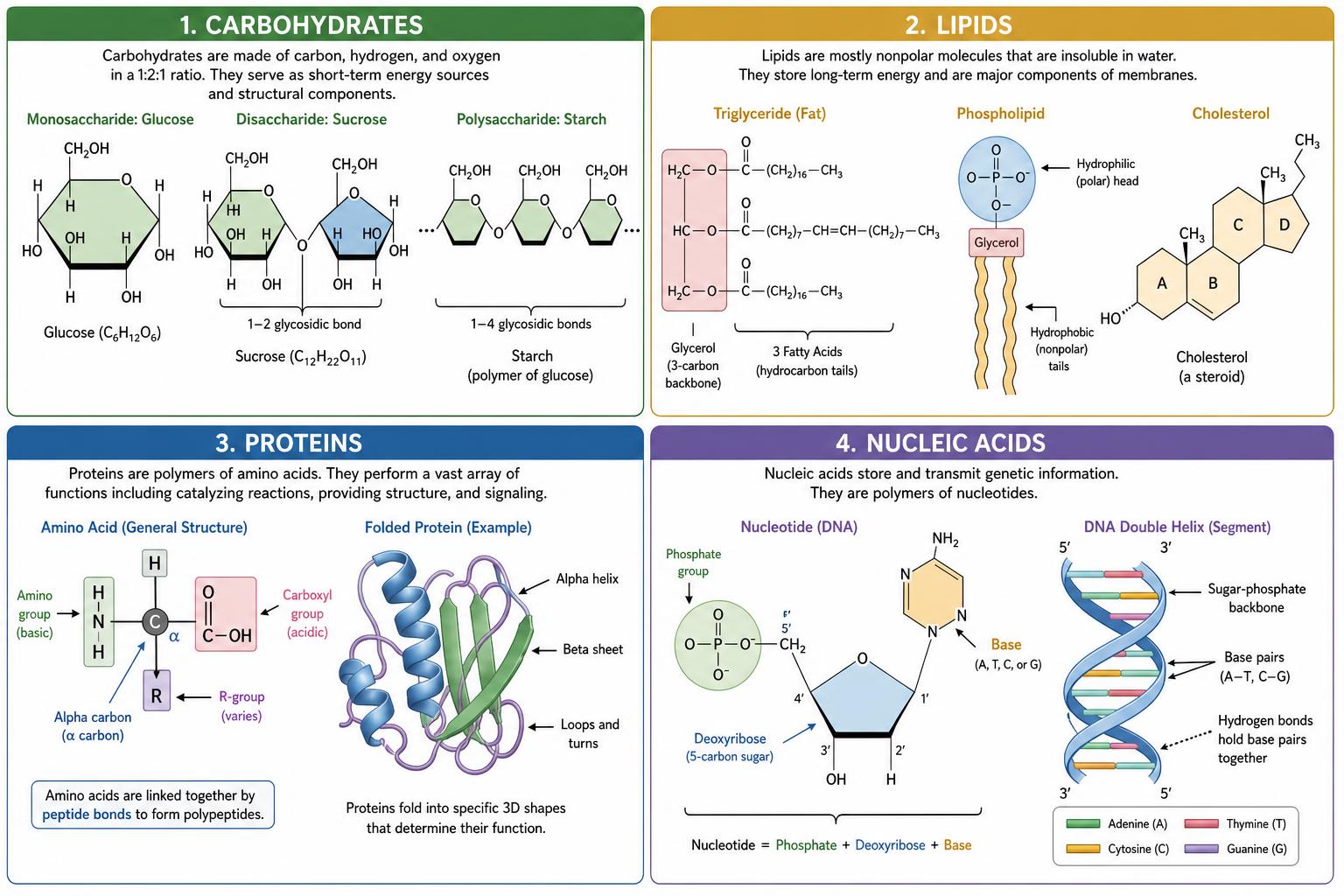
Carbohydrate structure drives function
Monosaccharides link via glycosidic bonds to form disaccharides and polysaccharides. The way those bonds are oriented (α vs. β) and branched changes the physical properties of the resulting polymer dramatically, even when the underlying monomer is the same glucose molecule.
Starch (α-1,4 linked glucose, some branching) coils into a compact helical shape ideal for energy storage in plants. Glycogen is even more highly branched, exposing many ends that can be rapidly hydrolyzed to release glucose quickly in animal liver and muscle. Cellulose (β-1,4 linked glucose) forms long, straight, H-bonded chains that pack into rigid fibers - a structural role in plant cell walls, and the β-linkage makes it indigestible to most animals because they lack the enzyme to cleave it.
- Quick energy: monosaccharides feed glycolysis directly.
- Storage: starch in plants, glycogen in liver/muscle.
- Structural: cellulose (plants), chitin (fungal walls, arthropod exoskeletons).
Lipid properties: saturation and amphipathicity
Triglycerides consist of glycerol joined to three fatty acids by ester bonds. Saturated fatty acids have no C=C double bonds, so their hydrocarbon tails are straight and pack tightly together, producing solids at room temperature (butter, lard). Unsaturated fatty acids contain one or more double bonds that introduce kinks, preventing tight packing and keeping them liquid at room temperature (vegetable oils).
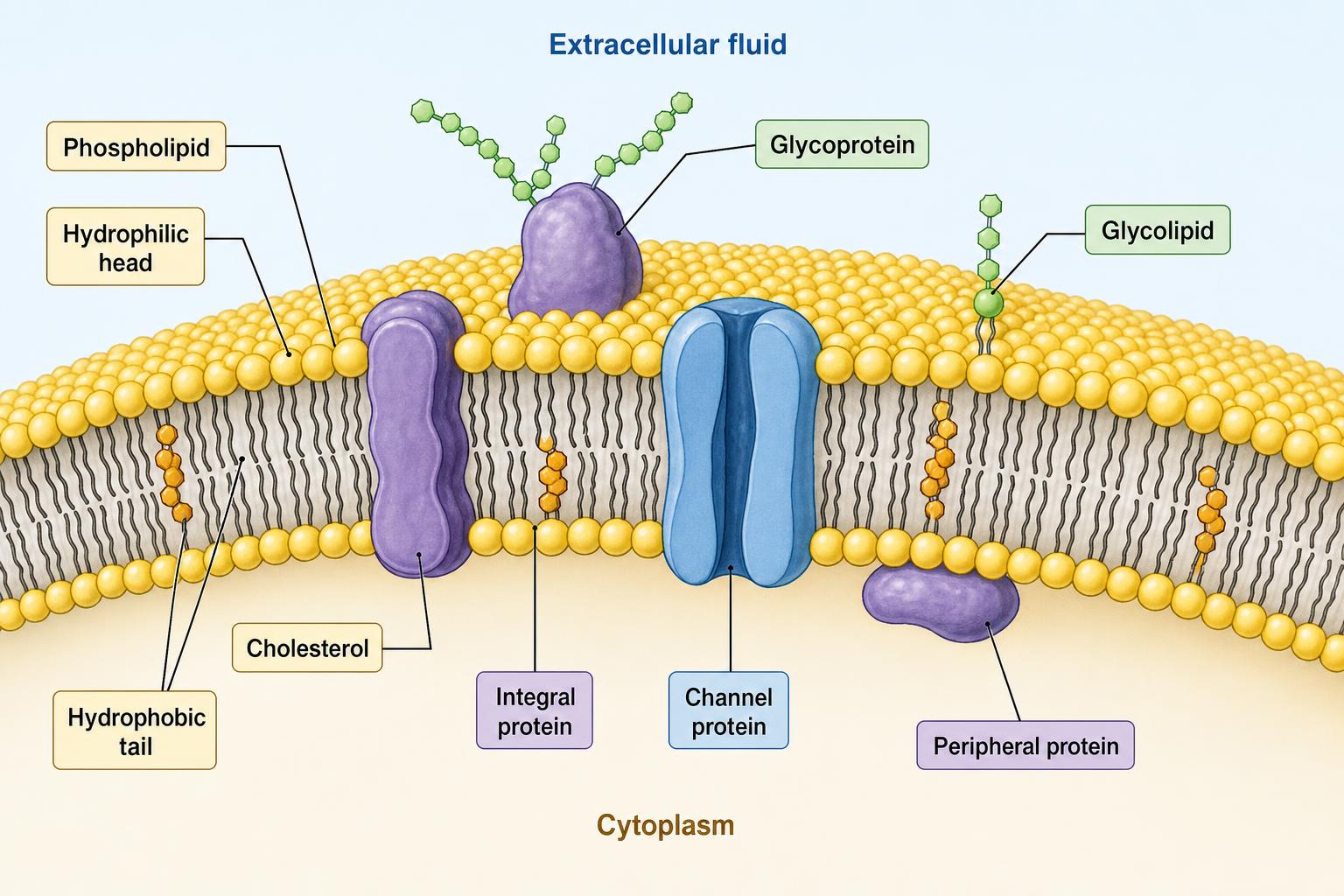
Phospholipids are amphipathic: a hydrophilic phosphate-containing head and two hydrophobic fatty-acid tails. This dual character is what causes them to spontaneously self-assemble into bilayers in water, with heads facing the aqueous environment and tails buried away from it - the physical basis of every cell membrane.
Protein properties: R-group chemistry
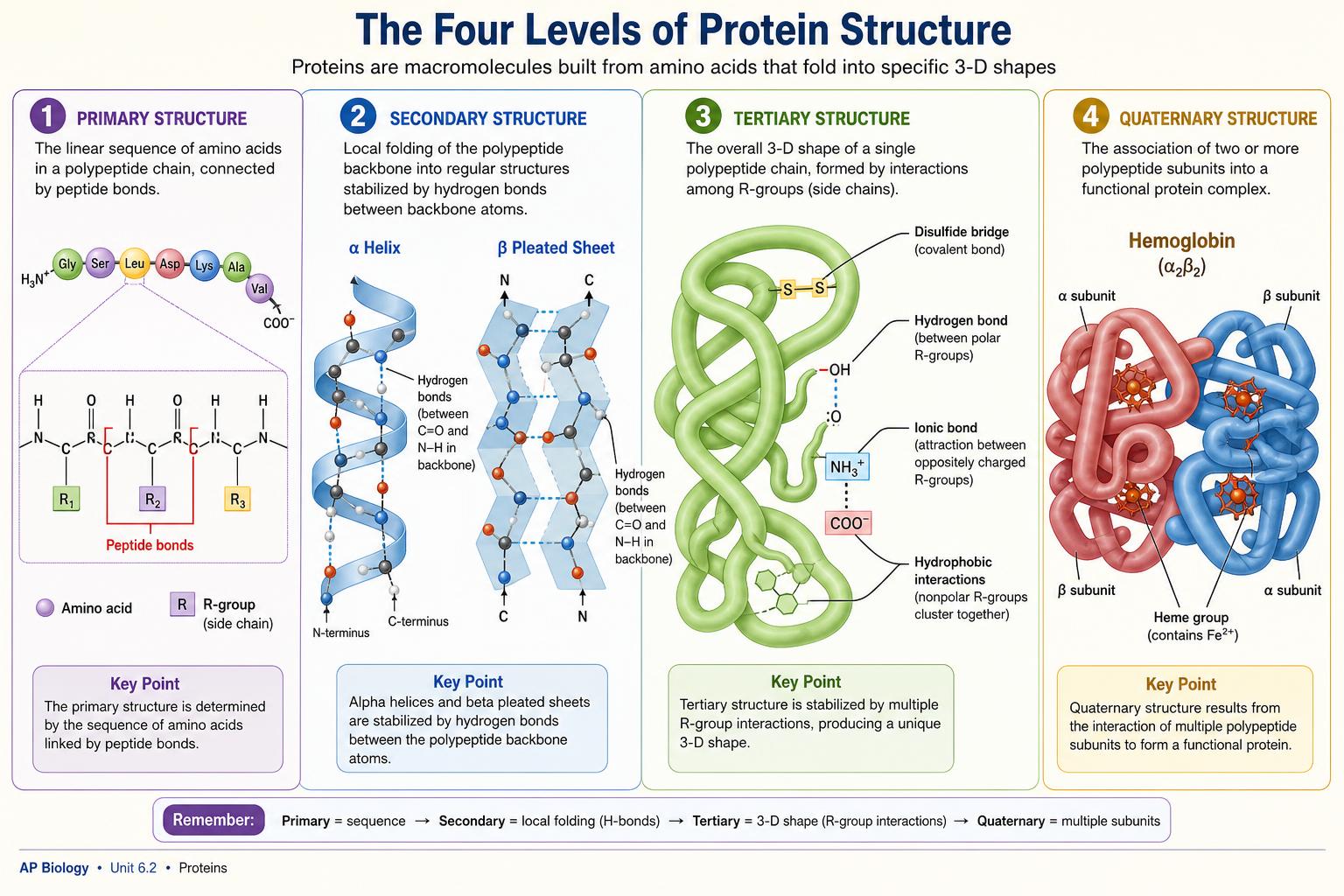
Each amino acid shares a common core (central α-carbon, amino group, carboxyl group, and hydrogen) but differs in its R-group, which can be nonpolar/hydrophobic, polar/uncharged, acidic (negatively charged), or basic (positively charged) at physiological pH.
This variation gives proteins an enormous range of possible chemical properties along their length. A protein rich in nonpolar R-groups tends to be less water-soluble and may associate with membranes, while a protein studded with charged and polar R-groups is typically water-soluble and can participate in ionic or hydrogen-bonding interactions with other molecules.
Polarity and solubility across macromolecule classes
Across all these macromolecule classes, the same underlying principle governs solubility: molecules or regions rich in polar and charged groups (hydroxyls, carboxyls, amines, phosphates) interact favorably with water and are hydrophilic, while molecules or regions dominated by C-H and C-C bonds are hydrophobic.
This is why carbohydrates and nucleic acids (rich in hydroxyl and phosphate groups) are generally water-soluble, why triglycerides are not, and why proteins can be functionally diverse - folding to expose hydrophilic surfaces to the cytoplasm while burying hydrophobic cores, or embedding hydrophobic stretches within a nonpolar membrane interior.
Key terms
4
- Glycosidic bond
- Covalent bond linking two monosaccharides, formed by dehydration synthesis.
- Saturated fatty acid
- A fatty acid with no C=C double bonds, allowing tight packing; solid at room temperature.
- Unsaturated fatty acid
- A fatty acid with one or more C=C double bonds that kink the chain, preventing tight packing.
- Amphipathic
- Having both a hydrophilic and a hydrophobic region, as in phospholipids.
Sign-off
Finish this lesson
A lesson only counts once you've read all the way through and completed every activity on the page.
- Read the full lesson (scroll to the end)
- Complete all activities (0/3 done)