
Cell Compartmentalization
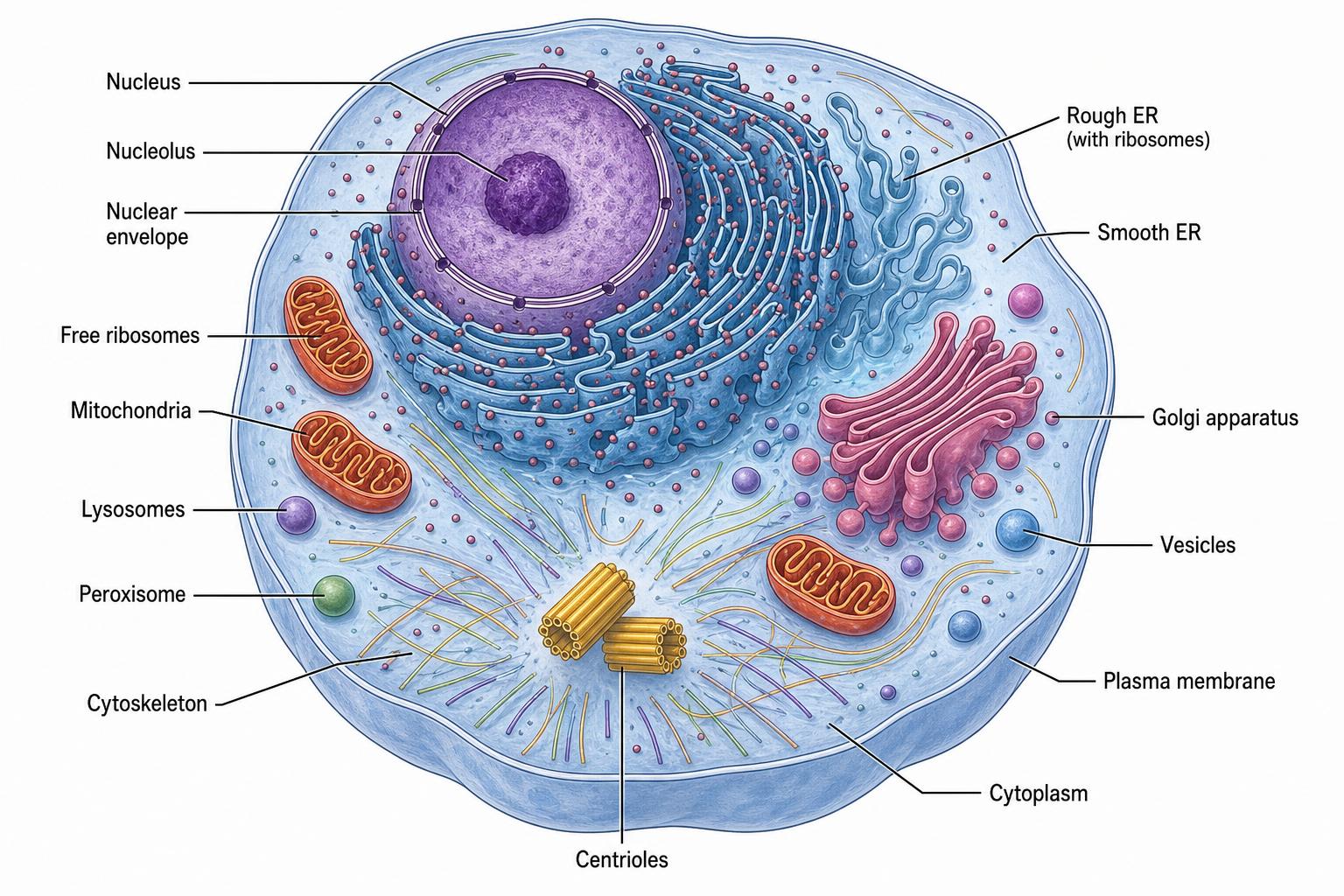
Internal membranes divide the eukaryotic cell into distinct compartments, each maintaining conditions suited to its specialized reactions.
The problem compartmentalization solves
A single eukaryotic cell must simultaneously carry out digestion (requiring acidic, enzyme-rich conditions), protein synthesis and folding (requiring an oxidizing environment with chaperones), lipid synthesis, and energy production (requiring precise proton gradients) - processes that would interfere with or even destroy one another if they occurred in the same open space.
By enclosing each function within its own membrane-bound organelle, the eukaryotic cell can maintain a distinct local environment - a specific pH, ion concentration, redox state, and set of enzymes - optimized for that function, without those conditions disrupting the rest of the cytoplasm.
Compartmentalization enables gradients and concentration
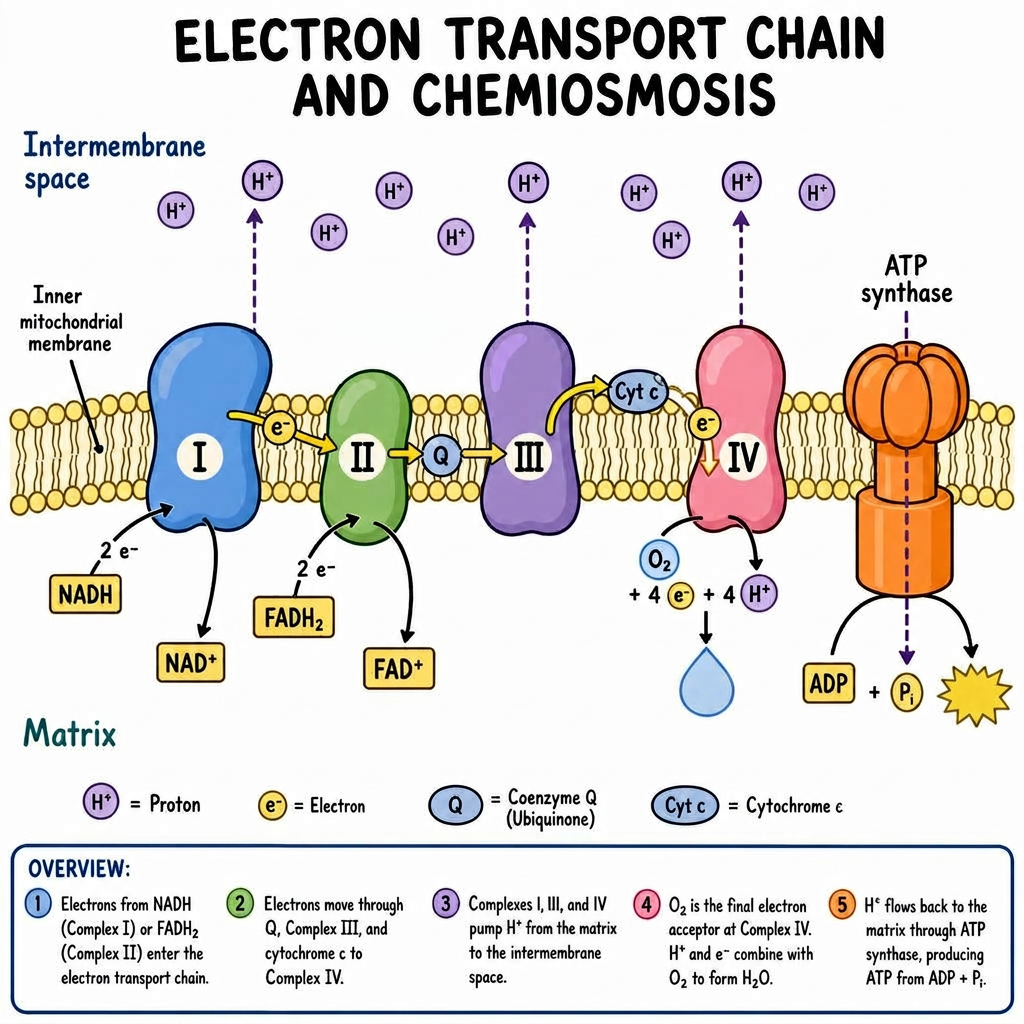
Some of the most important processes in the cell depend on establishing a chemical gradient across a membrane - this is only possible if that membrane encloses a distinct compartment. Mitochondria pump protons into the intermembrane space during the electron transport chain, creating a steep proton gradient across the inner membrane that ATP synthase then harnesses to generate ATP.
Lysosomes maintain an acidic internal pH (around 5) far lower than the neutral cytosolic pH, which is essential for their hydrolytic enzymes to function and simultaneously protects the rest of the cell - if those enzymes leaked into the neutral cytosol, they would be far less active and less dangerous.
Compartmentalization increases surface area for reactions
Many essential biochemical pathways occur on or within membranes rather than in free solution - the electron transport chain, the light reactions of photosynthesis, and the initial folding of secreted proteins in the rough ER, for example. By folding internal membranes into cristae, thylakoids, and the extensive network of the ER, the cell dramatically increases the membrane surface area available to host these reactions, without simply expanding the entire cell's boundary.
Coordination between compartments
Compartmentalization does not mean isolation. Organelles constantly exchange materials and signals via vesicular trafficking (the rough ER to Golgi to plasma membrane secretory pathway), through direct membrane contact sites, and via selective transport proteins embedded in each organelle's membrane.
This coordinated exchange allows the cell to function as an integrated system: newly synthesized proteins are folded in the ER, modified in the Golgi, and delivered to their correct final compartment, while signals and metabolites move between the nucleus, mitochondria, and cytoplasm to regulate gene expression and metabolism in response to the cell's needs.
Key terms
4
- Compartmentalization
- The separation of a cell's internal space into distinct membrane-bound regions, each with a specialized function and internal environment.
- Organelle
- A specialized membrane-bound structure within a eukaryotic cell that performs a specific function.
- Proton gradient
- A difference in H+ concentration across a membrane, maintained by compartmentalization and used to drive ATP synthesis.
- Vesicular trafficking
- The transport of materials between organelles and the plasma membrane via membrane-bound vesicles.
Sign-off
Finish this lesson
A lesson only counts once you've read all the way through and completed every activity on the page.
- Read the full lesson (scroll to the end)
- Complete all activities (0/2 done)