
Cell Cycle
The cell cycle alternates growth phases with DNA replication and mitosis, producing two genetically identical daughter cells.
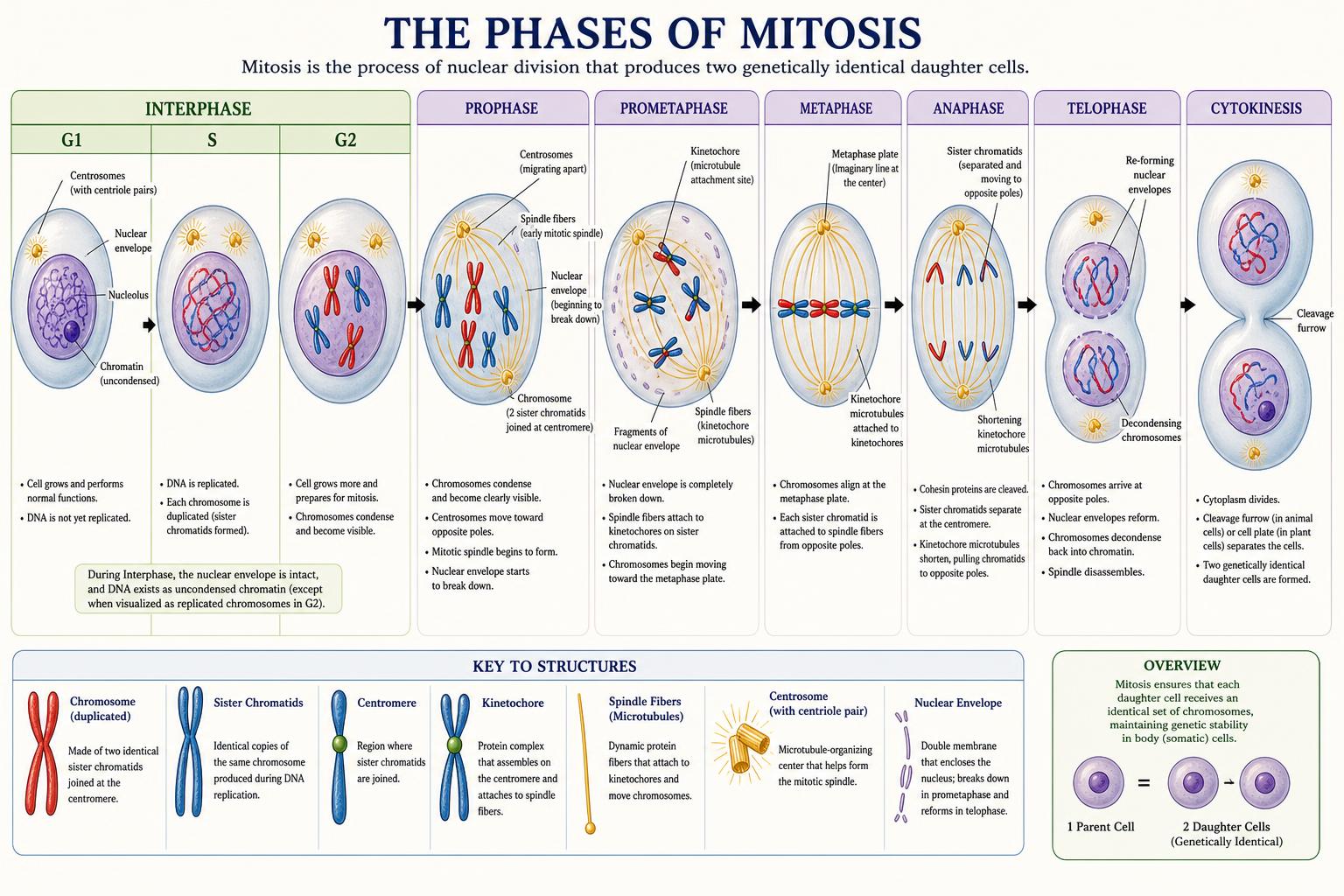
Phases of the cell cycle
The cell cycle has two big parts: interphase (most of the cell's life - G1, S, G2) and M phase (mitosis + cytokinesis).
- G1: cell grows, makes proteins and organelles, decides whether to divide.
- S: DNA replicates; each chromosome now has 2 sister chromatids joined at the centromere.
- G2: more growth, prepares for mitosis, double-checks DNA.
- M: mitosis (PMAT - prophase, metaphase, anaphase, telophase) followed by cytokinesis.
- G0: non-dividing 'rest' state where many specialized cells (neurons, mature muscle) live.
Mitosis step by step
- Prophase: chromosomes condense, nuclear envelope breaks down, spindle forms from centrosomes.
- Metaphase: chromosomes line up along the metaphase plate, each attached to spindle fibers from opposite poles.
- Anaphase: sister chromatids separate and are pulled to opposite poles.
- Telophase: nuclear envelopes reform around the two sets of chromosomes; chromosomes decondense.
- Cytokinesis: cytoplasm splits - cleavage furrow in animals, cell plate in plants - yielding 2 genetically identical daughter cells.
Why the cycle matters
The cell cycle underlies growth, development, and tissue repair in all eukaryotes. The lengths of the different phases vary widely between cell types - rapidly dividing cells like those in early embryos or bone marrow spend little time in G1, while most differentiated adult cells sit in G0 indefinitely.
Because mitosis produces genetically identical daughter cells, it is the mechanism by which multicellular organisms grow from a single fertilized egg into trillions of cells, and by which damaged tissues are replaced, all while preserving the genetic information encoded in the original cell.
Key terms
4
- Interphase
- The G1, S, and G2 phases of the cell cycle, during which the cell grows and replicates its DNA.
- Sister chromatids
- Two identical copies of a replicated chromosome joined at the centromere.
- Cytokinesis
- Division of the cytoplasm, producing two separate daughter cells after mitosis.
- G0 phase
- A non-dividing state that specialized or resting cells can enter after G1.
Sign-off
Finish this lesson
A lesson only counts once you've read all the way through and completed every activity on the page.
- Read the full lesson (scroll to the end)
- Complete all activities (0/1 done)